

We are told Reels and TikTok are a necessary evil in music marketing. But for the independent artist, Reels don’t meaningfully grow listenership — at best, they become their own product, inducing demand for more Reels, not your music.
A Necessary Evil?
Everyone knows a musician today must post Reels and TikToks to find their audience. Music marketing guides abound with such advice: “For artists and labels, TikTok is no longer optional. It is the front door to the modern music industry,” proclaims the TikTok music promotion guide by Dynamoi. There’s reason to believe this: according to the same guide, “84% of songs entering the Billboard Global 200 in 2024 first went viral on TikTok.”1 So don’t even think about charting unless you can go viral.
Researcher Alexandria Arrieta found that creators see posting short-form video as necessary for success. A&R professional David Rodriguez told her that he considers it a “necessity” despite many artists finding it cringe or even a danger to their artistic integrity and identity2.
Or as friend of the blog Danny Murgatroyd from Manchester indie prog band Legs On Wheels told me, “I see it is a necessary evil to be handled as efficiently as possible, with minimal demand on the brain.”
Posting Reels is something you just gotta do, even if you hate it.
The video has always been a part of music marketing
Long before MTV, music stars and their record label handlers pushed their music with visual components. In the 1940s, literal reels called Soundies played on “jukebox-like projection machines in bars, restaurants and other public spaces”3. In the 1980s, the music videos of stars like Michael Jackson and Prince broadcast on MTV (after the station’s initial refusal to air Black artists) “helped establish the music video as an essential element of music marketing and creative display”4.

Music videos had a notable effect on record sales, kickstarting the careers of several video-friendly artists like Cyndi Lauper, skyrocketing those of then-rising stars like Madonna5, and revitalizing those of longtime performers like Tina Turner and Peter Gabriel6. Promotions like MTV’s “Buzz Clips” had a measurable impact on artist earnings7. “Seeing” the music became as important as actually hearing it.
The music video’s cultural and monetary driving power went beyond the music industry. Hollywood producer Don Simpson systematized the cross-promotional feedback loop between hit movie, hit single, and hit music video with such monsters as Flashdance (1983) and its theme pop song “Flashdance... What a Feeling”8. Meanwhile, visionary directors like David Fincher, Michel Gondry, and Spike Jonze shaped the music video as an art form in its own right9.
Even in the heyday of MTV, some artists resisted the obligation to enter this other, non-music medium. A Buzzfeed News article quotes Berklee’s George Howard: “There were a lot of artists like REM that said, Hell no, I’m not going to make videos. That’s demeaning, and I didn’t sign up for this.”10 Howard drew a parallel to the artists of today resisting the demands from their record labels to make short-form video content.
But now it’s all on you
Where the music video had a director, production team, cast, and crew, artists today are expected to do all of the work themselves. One music video would be made per single, but now artists are expected to post until the song takes off. Worse, labels have withheld releases for a lack of prerelease virality11. The pressure to post is real and falls entirely on the artist.
Artists are at the mercy of the algorithm for success. Effort goes into making videos, but the payoff is not guaranteed. This can be disheartening. Singer Bronze Avery told Rolling Stone, “To get just a couple of hundred or even a couple of thousand views, it’s so disheartening to the process of being an artist. It feels so defeating when they say, ‘Okay, that was great, but now you need to do that three times a day, every single day.’”
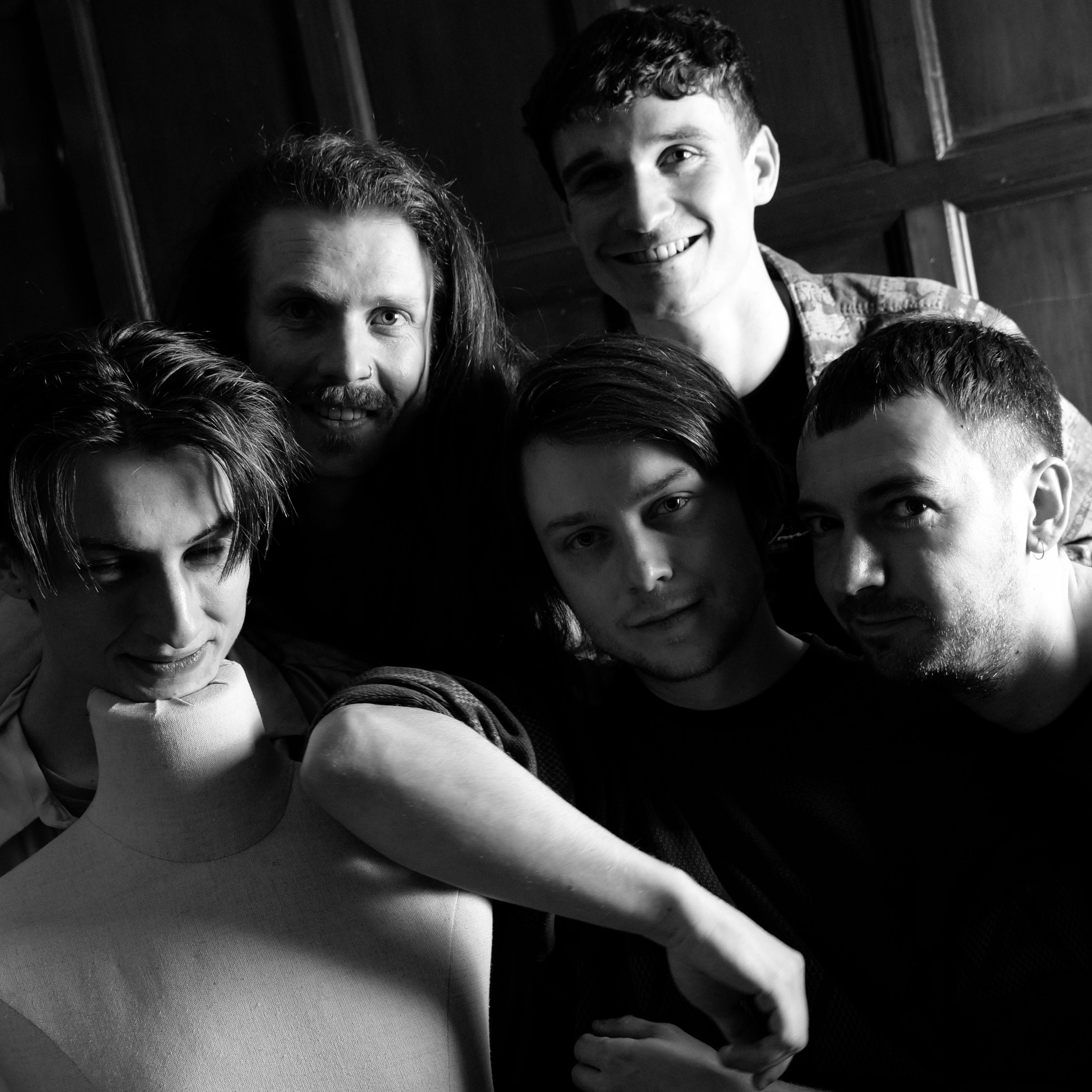
Danny Murgatroyd found he was posting to Tiktok four times a day for months, seeing “steady growth on there with one or two mild bursts but nothing that big”.
That’s not nothing, but it’s no wonder indie artists are seeing only mild results despite the effort: big labels have the money to shape the landscape, paying prominent influencers to manufacture taste or signing cross-promotion deals directly with TikTok12. Then there are labels and marketing companies that operate surreptitious “burner page” networks that fool social media platforms into thinking organic traffic is hitting their songs13. That’s not tinfoil hat, that’s just big business.
Outcome uncertain
Of course there are success stories of the unknown independent artist breaking through thanks to the democratizing power of social media. It’s tempting to think that your song could reach millions with a Reel if only it hit just right.
But it’s a grind. Artists must stay hyper-engaged, jump on trends, post consistently enough, post frequently enough, post sparingly enough, make their content algorithm-friendly, grab attention within 3 seconds, hold attention past 3 seconds, use the right hashtags, or not, and effectively serve an unknowable and ever-changing algorithm14 like it’s some labyrinthine puzzle-demon hoarding a pile of gold.
And even if you do it right, you’re not guaranteed success on the platform. A 2024 study by Duetti, a music finance firm, found that less than 1% of songs on TikTok achieve viral status (defined as video creations doubling within a month with 250,000+ total creations)15.
Presumably, the goal of posting is to get as many ears on your song as possible. These platforms are oriented around a For You Page (FYP), an algorithmic trough that considers who you follow as only one signal among many when deciding what to show you16. These platforms are not optimized for community building around an artist. In fact, following an artist you do discover through the FYP can quickly get old: that artist is, by necessity of the Reels grind, posting the same stuff every day. In their eternal search for new ears, they can overlook the connections they’ve already made.
“It’s the same clip that has blown up each time on Instagram, with different but similar text on screen,” Murgatroyd said. “So I regularly post it because it seems to always do pretty well, sometimes great.”
The clip is familiar to any Legs On Wheels fan: handheld footage of the band in their rehearsal space miming to a song with a skeptic-bait caption like “Prog rock died in 1977” over the band proving otherwise. Murgatroyd: “I noticed [this clip] tended to do well on TikTok. It’s from our previous album, which is a bit annoying, but you gotta go where the signal is loudest, really.”
Viral = successful?
So the goal is to go viral. But even then, virality doesn’t necessarily get you listeners. And it certainly doesn’t pay. TikTok pays royalties whenever users use your song, but the payout rates are “negligible” even for signed artists17.
Despite a handful of notable exceptions, virality doesn’t necessarily progress the musician’s career. Citing a Vox study of artists after they went viral, Arrieta writes, “out of the artists who had never toured before, approximately one-third of them went on to play at least one show, and only 15% of them went on to play music festivals.”
Engagement with a song on the short-form video platform does not necessarily translate to growth around the artist. Duetti found that, of the less than 1% of songs on TikTok that go viral, only about 15% see Spotify streams increase more than 30% four months later18. There are just too many drop-off points between a song appearing on a random video on a user’s FYP and that user clicking through to become a fan of the original artist19.
Of the less than 1% of songs on TikTok that go viral, only about 15%
see Spotify streams increase more than 30% four months later. [Duetti]
Worse, there are times when virality, especially for trans or other marginalized creators, pushes videos beyond the intended audience20 into the chud-realm of bigots and haters.
The truth is that after all the effort just to get a song to go viral, it takes even more effort to harness that attention and channel it into meaningful listenership. All the while, this should be the job of a marketing expert, not the musician whose main talent is supposed to be making music.
Even if a user does go through to Spotify, there’s evidence that Spotify streams don’t necessarily translate to deeper connections with fans or even ticket sales21. But that’s a different story.
The industry recognizes these problems
Record labels have complained for years about oversaturation of the market thanks to social media22. Major artists have openly complained about pressure from their labels to produce short-form content23.
On the Music Business Worldwide podcast, YouTube’s Global Head of Music Lyor Cohen called short-form video that doesn’t lead anywhere “a sugar high that doesn’t lead to artist discovery or create meaningful artist-to-fan connections, which are critical to breaking new artists and cultivating long-term, lucrative music careers”. Ostensibly, he’s aiming to fix this issue with various initiatives at YouTube Shorts, promising that “Shorts and music are symbiotic … Music supercharges the entertainment value of short-form videos and short form videos supercharge the growth of artists and songs”24.
But major labels and major platforms will of course continue to do whatever they can to keep attention on their artists and feeds. The independent artist with minimal budget and no following is left dropping emotional quarters into a slot machine that may never pay out.
When music Reels work
And yet every day there is a new carrot, a new “this could be you!”: an independent artist whose song went viral is now seen walking out to a sold-out crowd, securing brand deals, or taking home a Grammy.
These “viral hit = success” stories hide the work, dedication, support, and time involved.
At the end of May 2026, Australian multi-instrumentalist Ethan French — who was already a substantial presence with 400,000 Instagram followers25 — went mega-viral with his 56th entry in his “idea of the day” series. According to his own follow-up posts, huge names like Questlove, Justin Timberlake, and Jacob Collier followed his account, while T-Pain remixed and reshared the song. His follower count on Instagram shot up over 600k, and he’s apparently been doing the Australian morning news circuit to discuss.
Indeed, his monthly followers on Spotify went up from around 40k to over 150k in the week following his post26. So not only did he have a viral hit, this viral hit translated to actual listeners on Spotify.
The song is amazing, and Ethan French deserves all of the attention. But quality doesn’t usually predict virality or vice versa.
Here, the Reel itself is the song, the song itself is the Reel. This Reel is not a video tacked onto a short segment of some other song. The Reel shows Ethan French tracking the keys and laying down his vocals in real time over a prewritten backing track (whether miming or not is irrelevant — it looks authentic). It’s thrown out as an “idea of the day”, and you, the Reel watcher, are there with him in this act of creation, not receiving a final and unchangeable work, but a fluid, raw, transformable one with immense potential. There’s an element of participation here, native to the Reels medium. The creation can stand on its own on Spotify, but it was as a Reel that you fell in love with it.
Angine de Poitrine, the polka-dotted cardboard-costumed math rock duo from Quebec, went mega-viral off their KEXP performance video. The sheer weirdness of their stage personas surely kept the attention of many gormless scrollers long enough for the microtonal prog to infect their ears and penetrate their brains and transform them into fully-committed fans. Some might say the costumes are a gimmick, but the less cynical read is that the stage elements extend the pure aural experience of music into a multi-sensory, multi-media art form.
Following the tradition of KISS and GWAR, Angine and other current bands like HENGE and Castle Rat have an integral visual lore that makes their Reels a gateway into their world rather than just an obvious marketing push for a new song. And multi-media art is well-captured in a Reel, Reels being primarily a visual medium (with many users often scrolling on mute).
The acclaimed composer and singer-songwriter Gabriel Kahane has a complex relationship with the Internet, having once taken a year off from it completely. But he does occasionally post a Reel, most memorably in his Twitterkreis series, in which he sets famous tweets to music, performed simply at his home piano. These are not really intended to draw in an audience to anything beyond what the Reel is — they’re native to the Reels format.
“I see it mostly as a standalone artform, and as a way to grow my audience — with the huge caveat that a social media audience won’t necessarily translate to ticket buyers,” Kahane told me. “When I post a reel that does well, I’ll usually get anywhere from 50-200 new followers over the course of a week. If a handful of those folks take an extra step to explore more of my work, that’s success. But for the most part, I think of these little pieces as existing in their own aesthetic universe.”
Kahane’s most recent entry, “Elegy for the U.S.A. (Waffle House)”, is a good example of his comic-but-serious Reel style. “It felt like it said something true about where we are as a nation, cloaked in humor & irony,” he said. “I’m usually either a) indulging in absurdist humor to offer my followers a bit of relief from the horrors of the world, or b) trying to get at truth through satire.”
“I think of these little pieces as existing in their own aesthetic universe.”
-Gabriel Kahane
Content to make content?
There are many examples of bands or musicians packaging their music for Reels, with the performers tightly composed for 9:16 video in an aesthetically-pleasing environment, lip-syncing the hookiest 30 seconds of their songs over and over.
This seems to reach people, though it’s unclear if this really translates to listening, album sales, or ticket sales. I asked several bands whose Reels clearly perform well whether the views translate to streams or sales, but none could or would share their stats.
In any case, I’m not disparaging these videos or denying they can reach eyeballs; my question is whether eyeballs on Reels really mean ears on music, and, consequently, whether a musician must become a multi-media omni-professional in order to have their music heard.
There’s pressure on musicians to become “content creators” to survive. But “content”, amorphous as it is, is its own art form distinct from music.
Ryan Wentz — one half of comedy duo Two Tree Hill and the whole of solo project Tennis Elbow — is an interesting case because he’s a real musician who also thrives on making viral funny content for Reels and TikTok. On whether his posts have the ultimate motive of funneling listeners into his less jokey music, Wentz told me, “It really is an impossibility to create content consistently that will funnel to [your earnest music]. … The necessary evil is creating comedy or parody music that can get people interested in you as a person, so that when you release stuff that you care about, they listen to it. That obviously doesn’t always happen, but that’s the idea.”
It’s an understandable premise: like the bar musician who plays covers but has a catalog of originals ready if only someone would ask, there’s a logic to connecting as a performer first and songwriter second.
“When you’re making music that is from the heart and earnest,” Wentz went on, “if you don’t have an immediate hook or your finger on the pulse of what people are interested in right now, it’s an uphill battle to get people interested in that.” When not making funny videos or performing jazz-comedy live with Don’t Stop I’m About to Jazz, Wentz does what he calls “late 90s piano rock pastiche” that he claims “no one is necessarily interested in right now”. “But it doesn’t mean I don’t want to make it or that it’s not fulfilling to make in the first place,” he said. (Check out his latest release, Love is a Noble Madness, on Bandcamp.)
Meanwhile, legendary YouTuber and musician Hot Dad — who has an upcoming Future Imperfect vinyl release — told me, “If you are willing to do the things that are not at all your art in order to get people to maybe come check out your art, you can maybe get somewhere. … I realized I’m not willing to do any of that, and I knew I was devaluing myself by not referring to myself as an artist.” Hot Dad has embraced the label “emotional comedy musician” over “comedy YouTuber”, let alone “content creator”.
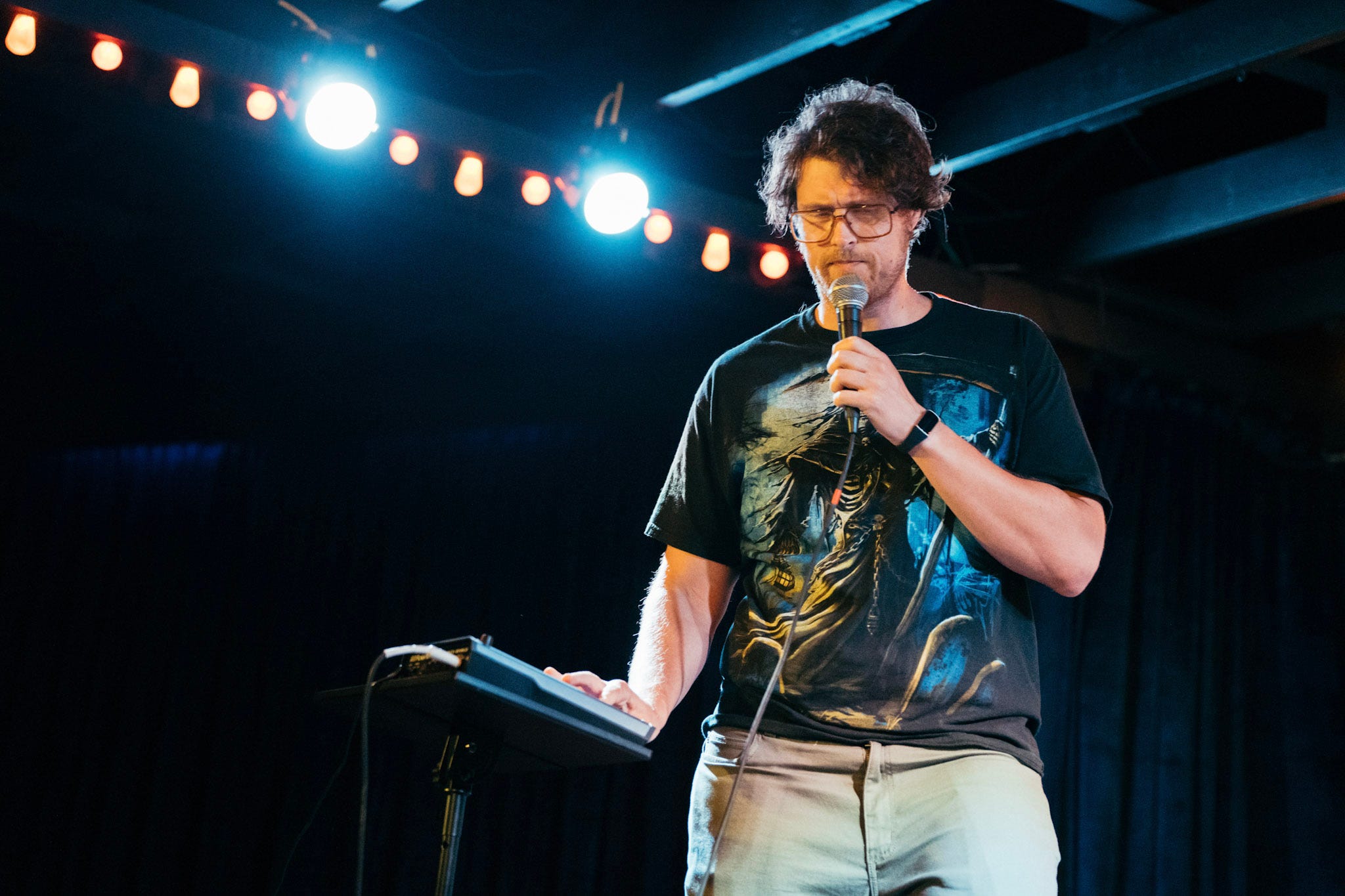
“The only thing that ever worked at all was my Everlong ‘snare only’ drum cover,” Hot Dad said. “Doing that shit just leads audiences to be like, ‘oh, it’s the funny silly guy (who might make songs)’.” Hot Dad also has a viral sound on TikTok for his song “My Grandson (I’d Love for You to Meet)”, unironically used by hundreds of new grandparents in TikToks showing off their new grandsons. But none of this is converting to deeper engagement. “The idea that some viral stunt will lead people to sit down with your somewhat challenging art is a fuckin’ pipe dream. It doesn’t make any sense.”
“The idea that some viral stunt will lead people to sit down with your somewhat challenging art is a fuckin’ pipe dream. It doesn’t make any sense.”
-Hot Dad
Inducing demand for more Reels, not your music
“It is a false hustle,” Hot Dad said, “because if you want to do the thing that you actually do, unless it’s what already works, it does nothing.” This is the trap of posting Reels. Success on Reels leads to more demand for your Reels, not for your music. Unless your Reel is the art you’re intending to put out, you will perpetually be disappointed by the lack of conversion to your “real” art.
In the Reels and TikTok success stories, there’s been rare luck, big label money, a visual element integral to the music, or a natural alignment between what the Reel is and what it’s trying to sell. When a Reel is only trying to sell itself, it can work.
“That’s what always pisses me off about people saying, ‘Hey Hot Dad, … why don’t you try X or Y?’” Hot Dad said. “If I did X or Y, it would only increase the demand for X or Y. When people tell me to try that stuff, it’s the equivalent to saying, ‘You should get another job.’ Without massive fame where you’re just a personality who people want to hear from, most people can’t make the conversion succeed.”
Reels-shaped box
Just as the 78rpm disc shaped the pop single27, so too are short-form videos shaping the modern song. Some artists like The Kid LAROI and Tiagz fully embrace this form, creating music specifically for the platform by tapping into its memes, celebrities, and culture28. Other artists must “compromise” on the platform, posting in a way that fulfills platform demands while being less interesting or important to them creatively29. There is undoubtedly pressure to create music more likely to go viral30.
Even unintentionally, artists can find themselves “pigeonholed” by the algorithm and have a harder time transitioning from the style that goes viral into another, perhaps more musically authentic, style31.
And there’s the cost of time spent on satisfying the insatiable algorithm instead of working on your art. “It’s really easy to get sucked into making a life out of living for the algorithm, and my strong suspicion is that there’s a bit of a devil’s bargain in there,” Gabriel Kahane said. “I’m sure if I set my mind to it and did nothing else, I could probably double the size of my IG audience in six months, but it would come at the expense of a lot of the creative work I’m getting paid to do.”
Kahane is the first to acknowledge how unusual and fortunate it is to be paid to write and perform without compromise. Through subsidized nonprofit orgs like orchestras and university presenters, Kahane makes a modest living. “The vast majority of folks who are doing the TikTok lottery don’t have that going for them,” he said. “My position isn’t some sacrificial holier-than-thou vibe. … I feel incredibly lucky to get to do what I do.”
I think such a living should not be so rare. (Insert Norman Rockwell man standing up for freedom here.)
Re-think success
Cognitive dissonance is one of the great wellsprings of misery. Too often, I see artists trying to post their way to “their audience”, only to be disappointed when that audience doesn’t materialize. The lie is that Reels are a means to that end. To embrace the art form is to stop trying to make it into something it’s not, to stop expecting the Reels audience to engage with music when they’re really there to engage with Reels.
Genuine connections between music and listener are made one at a time.
Gabriel Kahane has built a following through his writing on his Substack and mailing list. “The mailing list has no algorithm. It is direct marketing with no intermediary,” he told me. “People have opted in to a mailing list for more than mere entertainment. My most dedicated fans are the ones who are there for the whole package: the songs, the orchestral work, the political & spiritual dimensions, and the writing. The mailing list is just a better container for that.”
When we build on TikTok or Instagram, we’re building for the owners of those platforms. With a mailing list, Kahane said, “I have the data. I know who opens the emails, how much they engage … If a newsletter platform becomes enshittified, I can always take my list elsewhere.”
Perhaps we’re over-indexing on social media reach anyway. “If we are living in a culture where live experience is threatened or impoverished, it seems odd to me that we would invest huge amounts of energy in cultivating audiences in a digital realm, when what we ultimately want to do is get them to see us live,” Kahane said.
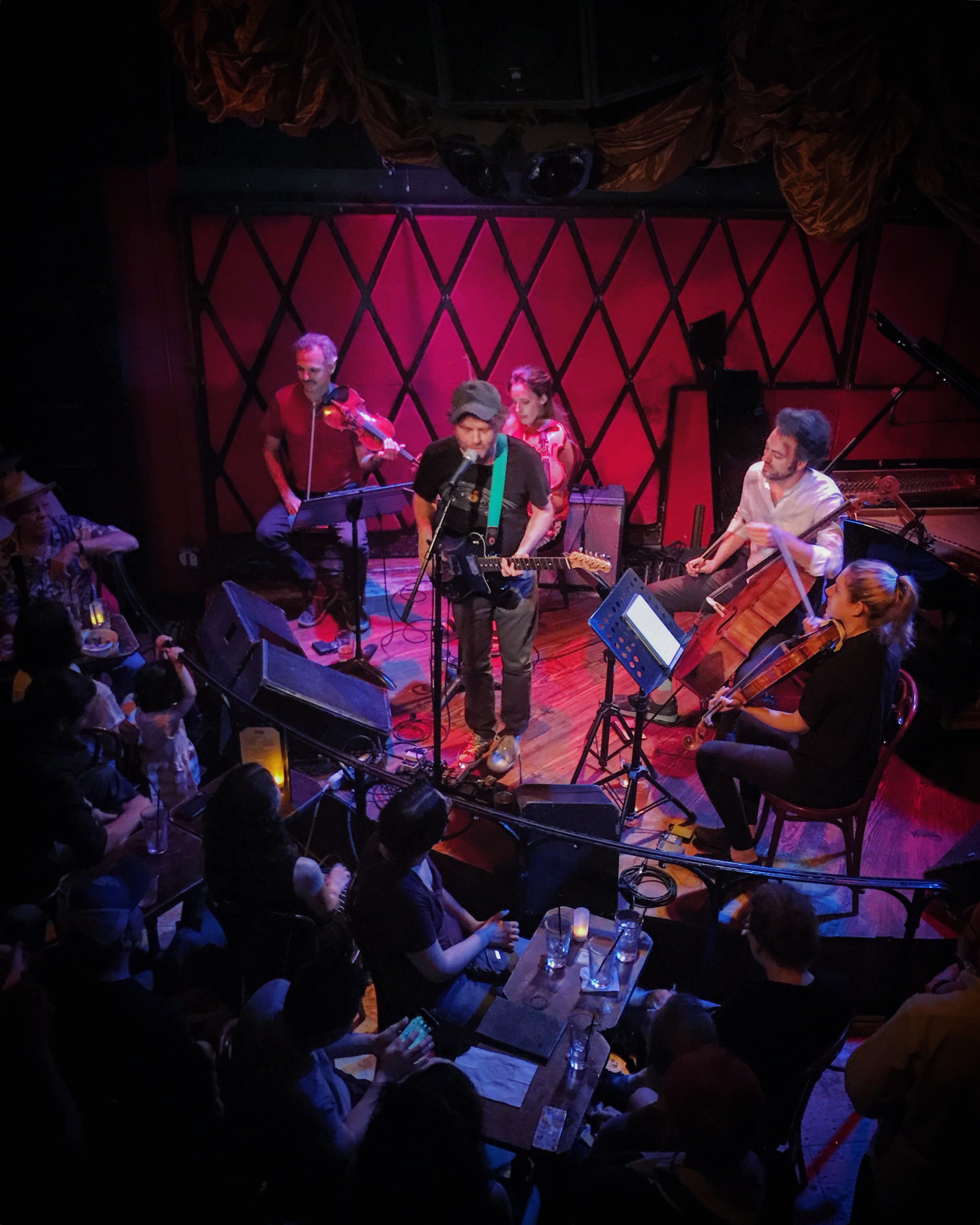
Indeed, playing live is and always will be one of the best ways to meaningfully connect your music with people, if you can do it. “The best way to spread earnest music nowadays [is] through playing live and doing live shows or doing opening sets,” Ryan Wentz said.
If we must post on big platforms, find the ways to develop meaningful connections there, rather than trying to get the broadest but shallowest reach possible. Perhaps thanks to noted short-form skeptic Lyor Cohen at the helm, YouTube seems to be pushing smaller music acts lately. Wentz noted it’s the only way he’s been consistently finding indie bands, and he recommended “making YouTube videos that are long form music videos or you playing your music live in some capacity … there is a world where that gets spread with an underground audience.”
Danny Murgatroyd of Legs On Wheels has started streaming his “super boring practice” on Instagram Live, taking the opportunity to respond to fans’ questions and comments in the chat. “It’s the closest thing — via social media — to actually hanging with the fans, the community around the music,” Murgatroyd said. “I’m pleasantly surprised each time by how many people come and go.”
The catch? “I insist on reading every [comment] … it’s definitely not conducive to practicing!”
The hustle is real and it’s draining. Consider giving yourself permission to stop chasing the viral hit. Refocus on your art. Deepen your connection with the intentional listeners you do have. Marketing should serve the music, not become the product. Make good music. Connect with real people.
Dynamoi — “TikTok Music Promotion: Discovery, Ads, DSP Revenue” (2026)
Arrieta, Alexandria — “The Limits of Virality: Music Creators and Platform Negotiation in the Era of Short-Form Video” — Social Media + Society (2025)
History.com — "The Music Video, Before Music Television" (2011)
Wayte, Larry — Pay for Play, “Chapter 15: The 1980s and 90s: Consolidation and MTV Pop Superstars” — University of Oregon Open Textbook (2023)
Behr, Adam — “40 Years of MTV: the channel that shaped popular culture as we know it” — The Conversation (2021)
Osborn, Rossin & Weingarten — Content and Correlational Analysis of a Corpus of MTV-Promoted Music Videos Aired Between 1990 and 1999 — Music & Science (2020)
Fleming, Charles — High Concept: Don Simpson and the Hollywood Culture of Excess, “Chapter One: The Baby Mogul” — Bloomsbury (1998)
Behr (The Conversation).
Weekman, Kelly — “Artists Are Complaining About Their Record Labels Forcing Them To Make TikToks, But That’s Nothing New” — Buzzfeed News (2022)
Roundtree, Cheyenne — “He Had a Billion-Stream Hit. Now His Songs Are in Limbo Until They Go Viral on TikTok” — Rolling Stone (2022)
Chow, Andrew R. — “Halsey Is the Latest Artist Complaining About the Music Industry’s Reliance on TikTok” — TIME (2022)
Dynamoi.
Roundtree (Rolling Stone).
Dynamoi, citing Duetti.
TikTok — “How TikTok Recommends Videos #ForYou” (2020)
Arrieta.
Dynamoi.
Arrieta.
Arrieta.
Robinson, Kristin — “The Music Business Saturation Problem Keeps Getting Bigger: Analysis” — Billboard (2025)
Weekman (Buzzfeed News).
Music Business Worldwide — “As YouTube launches new ‘Top Songs on Shorts’ chart, Lyor Cohen says ‘Shorts and music are symbiotic’” (2023)
Data from instrack.app
Data from artist.tools
Gutoskey, Ellen — “Why Are So Many Pop Songs Roughly Three Minutes Long?” — Mental Floss (2022)
Chow (TIME).
Arrieta.
Roundtree (Rolling Stone).
Arrieta.
thanks for this! i too had some high-performing reels that made no impact whatsoever on any of my streaming numbers - a rude awakening but i'm glad to have learned the lesson.